

26. Januar 2021
Making game development work: Two examples from our Incubator
What is the best way to make a game? Don’t answer! It’s a trick question. There may never be one universal way of managing work across different teams and project sizes. Still, valuable lessons can be learned from the actual experience of the professionals in our teams.
Developing games is notoriously hard, and it shows. Anecdotes of failed leadership and excessive overtime keep popping up in the industry. A part of the problem is cultural, but there is also the very real difficulty of managing complex creative work in a medium that is ever-changing.
How do you make a game in a successful and sustainable manner? We sat down with two people from very different projects and talked about their challenges and learnings. Then, we made a list.
Hannah Paulmann is project manager and 3D artist at Curvature games. The studio has three full-time members, but eight people work at Curvature Games in different arrangements. The manpower is put to good use: „The Amusement“ is a highly ambitious project – a VR game with a bold art style, a focus on exploration, and technical innovations under the hood.
Julia Reberg is doing everything: She is working on her roguelite-strategy-sim „Alchymia“ alone. With a Master’s degree from HAW Hamburg, a background in graphics and intermedia design and some professional experience, she has already shown herself equipped to rise to the challenge.
- Hiring people that work for you
When your team is growing, finding the right people to employ remains a big challenge. A lot has changed in the workforce – in a place like Hamburg, it may be easy to find professionals eager to come on board. But for Hannah, it pays to take a hard look at new hires. „Our people are the essence of our company“, she says. A lot of their hires are colleagues she or her co-founder Eike Langbehn worked with before. Hannah also recommends looking beyond the CV in order to find people that share a vision of the project. Everyone has to find something that they personally want to contribute.
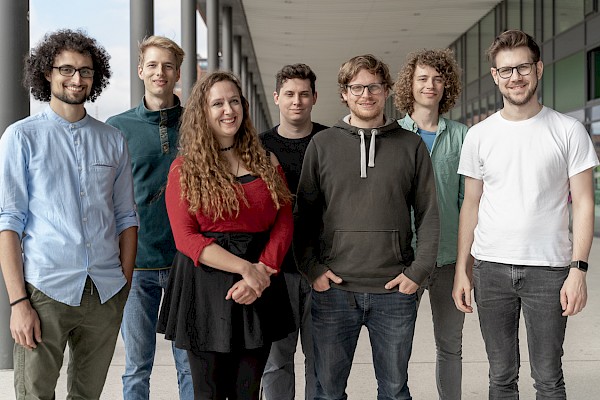
Hannah with her teammates from Curvature Games.
- Hierarchy is a four-letter word
The way work is structured is changing across the industry. Hannah is part of that change: „The word ‚hierarchy‘ is controversial to us“, she says. Her goal is to build a company of partners – ownership of the project is meant to be shared around. That does not mean that no one gets to criticize work or ask questions, Hannah clarifies: „It just goes both ways.“ Discussions are allowed and encouraged. The studio chat is open.
- Hats on
„For certain areas, there are people who have the hat on“, Hannah explains with a german idiom. The idea is less about assuming command and leading others, more about knowing what everyone’s doing. When different people work together, they have to coordinate. For each of the broader areas of development, one person is tasked with keeping track of progress.
- Eyes on the road
Doubt and second-guessing are normal in any creative endeavour. Julia is tackling the challenge by committing to closing things off: „I have the basic design worked out. Now I focus on implementing it“, she says. Hannah is following a similar strategy: Whenever a member of the team throws a creative curveball, she makes a note of the idea and sets it aside for later.
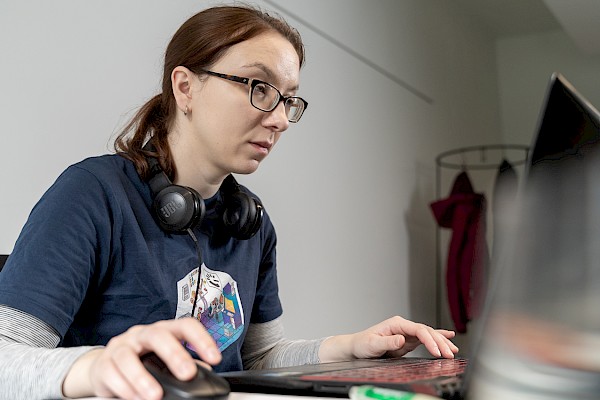
Julia at work on her game, Alchymia.
- Keeping track of progress
At Curvature Games, meetings for control, feedback and planning are held at least once a week. They „may take some time, but they pay off“, Hanna explains. Julia may work alone, but she definitely feels the challenge, too. She uses set dates as milestones that tell her whether she is still on schedule. Both use a variety of tools for project management and organization – including office chat, wikis, and digital whiteboards. Both swear by actively using them.
- A time for everything
It helps to actively make the day work for you. Julia likes to do „things that require a lot of brainpower“ before noon and things that feel less demanding after. That way, her day has „two productive halves“. Hannah tries to isolate tasks that require different kinds of thinking – if creative tasks come up during a day full of meetings, she hands them off to other team members.
- Call it a day
Working in an incubator can mean a lot of stress: Suddenly, workshops interfere with the usual workday. Julia talks openly about her struggle; „two-day-weekends“ were among the things she looked forward to during the program. But she stayed mindful about the dangers of burnout, especially when working from home: „I treat my days like normal workdays“, she says. That means tracking her time and forcing herself to stop at some point. Hannah also admits that they haven’t always been perfect in preventing overtime. But her studio’s approach makes sure that the studio feels the heat along with the employees: „Working overtime is not included in the salary.“ When people clock in too much time, they are encouraged to take a break.
It’s getting better
We are firm believers in sustainable game development. Our industry needs people to thrive while realizing their creative ambitions. If we manage to do that, a golden future lies ahead. One thing that gave us confidence while talking to Julia and Hannah: They take the challenge seriously and they are finding answers that work – at least for them.